-
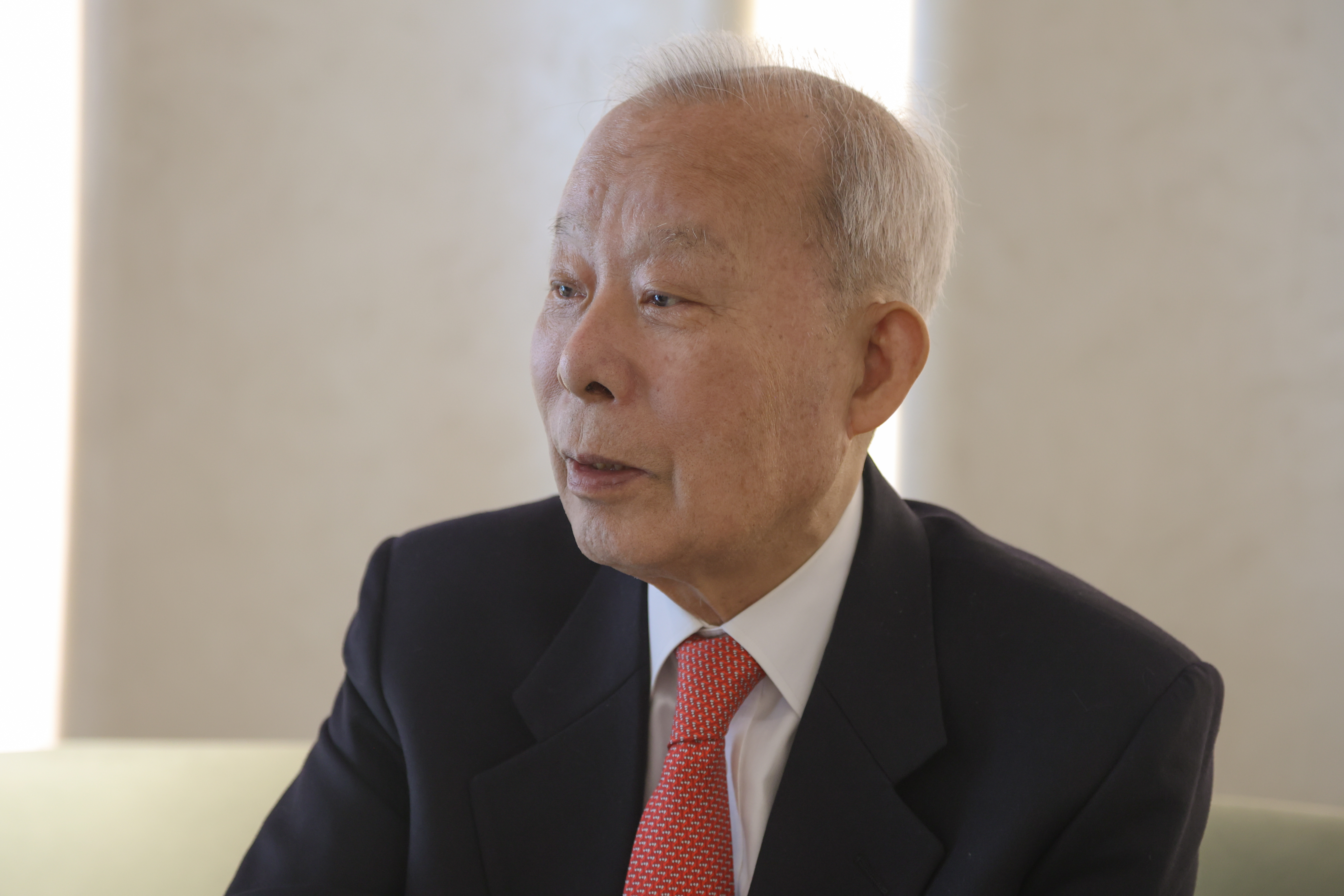
Never
Give Up!
Malawi’s ‘Messenger of Hope’
Jung Yoo-geun (Public Administration, ’67),
Chairman of Daeyang ShippingOn November 25 of
last year, at the ceremony for the government-designated 1st ‘International
Development Cooperation Day,’ KU alumnus Jung Yoo-geun
was awarded the Order of Civil Merit, Peony Medal. The
government recognized the achievements he has garnered by silently practicing
sharing in Malawi, one of the poorest nations in Africa.
Written by
Editor-in-Chief Choi Ki-young
Five
Years of Prayer, a Fateful
Encounter, and Malawi “Once I saw the
suffering people with my own eyes at the site, I couldn't turn a blind eye. The
work I started that way has now continued for 20 years.”Chairman Jung’s
connection with Africa dates back some 20 years. At the time, Daeyang Shipping
was designated by the UN World Food Programme (WFP) as a shipping carrier to
transport food for the underprivileged in Asia. When unexpected profits arose
from this project, which he had started to stay true to his company's founding
philosophy, Chairman Jung decided to donate the entire amount.“I prayed for
five years to find a channel to help Malawi. When I asked a WFP official to
recommend the poorest country in Africa, they pointed to ‘Malawi’.”The reality in
Malawi was devastating. It was a sequence of starvation and disease so terrible
that it was hard to believe people lived there. Chairman Jung has kept the
pledge he made that day until now.From
Hospital to University... Planting Seeds of ‘Self-Reliance’Chairman Jung’s
support did not stop at the simple delivery of goods. In 2008, he used his
private funds to establish the Daeyang Luke Hospital in Lilongwe, the capital
of Malawi. However, there was a severe shortage of nurses and doctors to work
there. Eventually, he established a College of Nursing, followed by a College
of Medicine, a College of ICT, and a College of Business, laying the foundation
for ‘Daeyang University.’Chairman Jung
showed a special attachment to the College of ICT.“Agriculture alone
cannot eliminate poverty. I thought ICT, where a small number of people can
generate high income, is the future of Malawi.”Education, which
began in an era when not a single student owned a mobile phone, has now grown
into a hall of learning where some 900 students study.20
Years Upholding the Belief “Do Not Boast”Throughout the
interview, Chairman Jung emphasized quiet relief, citing the biblical passage,
“Do not let your left hand know what your right hand is doing.” In fact, he has
rarely made his activities public. Even the global pop star Madonna tried to
establish a girls' school in Malawi in 2011 but eventually gave up and
withdrew. That is how harsh the local environment was. However, Chairman Jung
built a sustainable support system with his characteristic entrepreneurial grit
and problem-solving skills.“It was a
business I started after 15 years of public service, but now this work feels
like my destiny.”His life,
transforming from a public servant who passed the Higher Civil Service Exam to
a shipping magnate, and now to a messenger of hope for Africa, is preparing to
be released to the world as an autobiography.The
Standard of Giving... “Repaying the Debt to My Alma Mater is Natural”Alumnus Jung also
practiced his deep affection for his alma mater with the simple philosophy that
“If you have incurred a debt, it is only right to repay it.”In 2004, the KU School of Law urgently needed
to build an independent law library for Law School accreditation. Upon hearing
this news from his classmate and then Dean Chai Lee-Sik , Chairman Jung
said, “Give me the school’s account number and I will transfer it right away,”
and donated 3.1 billion KRW without hesitation. Since then, his continued
generous donations, including the establishment of the Haesong Law &
Culture Foundation and its initial endowment (1 billion KRW), played a decisive
role in improving the educational environment of his alma mater.The university
presented him with the Crimson Award in 2015, and the Alumni Association
awarded him the ‘Proud KU Alumni Award’ at the 115th Anniversary Ceremony to
express their gratitude.“I was just a
country boy from Namhae who came to KU, learned, and enjoyed life here. Repaying
that grace is a completely natural duty,” he laughed.Korea University
Haesong Law LibraryNever,
never, never give up!Alumnus Jung Yoo-geun’s
goal is ‘sustainability.’“The final goal
is for Malawi to have the self-reliance to run the hospital and university on
its own.”He expressed his
desire to create a solid foundation where the youth of Malawi can dedicate
themselves to their country.Alumnus Jung also
left a message for his juniors, quoting Winston Churchill.
“The world changes fast and
is difficult, but there are opportunities within. Never give up! Anyone who
endures and perseveres can eventually achieve anything.”
2026-02-06
조회수 : 4
-
Meeting the Recipients of the 2026 KUAA Academic Awards
Glorious FacesRecipients of the 2026 KUAA Academic AwardsWe met
the winners who illuminated the year 2025 in the fields of Humanities &
Social Sciences, Natural Sciences & Engineering, and Health & Medicine. [Humanities & Social Sciences Academic Award]Questioning the Unit of Understanding in the Korean LanguageProf. Nam Kichun (Psychology, ’81), School of Psychology
An Academic Award: A Collective Achievement, Not an Individual One Professor Nam Kichun has
dedicated his career to studying language cognition and brain mechanisms,
focusing on the information processing of word phrases in the Korean language.
With retirement approaching, he has recently reinforced theories on Korean
syllable and lexical information processing, striving to reveal how the left
and right hemispheres of the brain coordinate for language comprehension.“This
result was possible thanks to the efforts of fellow researchers and students
who have researched and debated with me for a long time.” Taking this award as
an opportunity, he expressed his intention to deepen his scholarly inquiry and
expand the social impact of his research.A Theory Starting from Korean, an Unprecedented ChallengeProfessor Nam’s research
begins with the structural characteristics of the Korean language. Noting that
Korean is fundamentally different from Indo-European languages like English, he
set the core unit of Korean understanding as the word phrase. Rather than
merely applying theories from academically advanced countries to Korean, he
sought to explain how Korean word phrases, composed of syllables and morphemes,
is processed in the brain according to the specific characteristics of the
Korean language. While there is room for further development, his work is
significant in that it presents a foundation for language comprehension
theories based on Korean. Since there were almost no preceding studies, the
research process was a series of challenges. From topic identification to
experimental design and publication, most were first attempts in Korea,
requiring the development of new research methods instead of applying existing
ones. Securing research infrastructure and funding was also a difficult task,
but he overcame this by building a research foundation based on a long-term
perspective and cultivating professional research personnel.Beyond Academia to Society, and to the Next Research Professor Nam views Korean
language information processing research as directly linked to academic
self-esteem. It not only strengthens the theoretical foundation of Korean
linguistics and Korean language education but also serves as scientific
evidence for more accurately assessing and diagnosing language functions in
children with language disorders and the elderly. Furthermore, it is a crucial
asset for AI research that reflects human language information processing
principles. Moving forward, he plans to expand lexical information processing
research into sentence parsing processes and establish a theoretical outlook
encompassing these, laying the groundwork for future scholars to continue the
research. The KUAA
Academic Award serves as a milestone
summarizing his past research and a new starting point connecting scholarship
that began with the Korean language to the next generation. Written by
Reporter Song Da-yeon.Finding the
‘Individual’ amidst Changes in International Politics Prof. Kim Sung
Eun (Political Science and
International Relations, ’04), Department of Political Science and
International RelationsReading Changes in World Order through Individual Choices The spread of
anti-globalization and right-wing populism is the most distinct change in
international politics today. Professor Kim Sung Eun reads this trend not
through states or structures, but through ‘individual choices.’ Analyzing the
liberal international order shaken since the emergence of Donald Trump, she has
consistently explored when economic shocks from globalization lead to political
radicalization and under what conditions that flow is mitigated. Her research,
traversing international politics and environmental politics, stands on the
awareness that changes in world order ultimately stem from voters' perceptions
and judgments.Populism, Climate Crisis, and the Role of Policy Professor Kim’s recent research
focuses on the rise of anti-globalization and right-wing populism. Why did
American voters support Donald Trump? Through what path does the economic shock
of globalization lead to support for populism? These are her key questions. At
the same time, she has noted that the spread of right-wing populism complicates responses to the
climate crisis. Her analysis of when voters perceive climate issues more
seriously and are willing to bear costs for climate policies serves as a vital
link connecting international politics and environmental politics. This
awareness extends to empirical analysis of the role of policy. Going beyond the
existing explanation that China’s economic rise led to Trump support, Professor
Kim focused on the US Trade Adjustment Assistance (TAA) program. She
demonstrated that when policies providing subsidies and job transition support
to workers damaged by trade exist, the tendency for economic shocks to lead to
support for populism is mitigated. This suggests that redistribution policies
can buffer political radicalization.Walking Together in Scholarship, towards the Next Question Professor Kim accepted this
award as an evaluation of the academic achievements accumulated by the faculty
of the Department of Political Science and International Relations over the
past 80 years. Her life partner, Professor Kim Dong Jung (Political Science and
International Relations, ’99) of the College of International Studies, is
another contributor to this award.“I
was able to continue my research without a career break thanks to my husband,
who has shared research and childcare since the early stage of my career,” she
said, speaking of the life balance behind her research. Recently, her focus has
turned toward Korean society. Analyzing Korea, where citizens’ interest in
climate change is high but policy responses remain passive, she inquires again
how individual perceptions and choices lead to policy. As she says, “You can
sustain research only when you enjoy the process more than the result,” this
KUAA Academic Award will serve as a new starting point for advancing toward the
next set of questions. Written by Reporter Cho Young-seo
[Natural Sciences
& Engineering Academic Award]An Engineer
Questioning Energy and Environment TogetherProf. Kang Yong
Tae, Department of Mechanical Engineering
Awareness towards Sustainable Energy Professor Kang Yong Tae is an
engineer who has researched energy and thermal/refrigeration systems. Under the
awareness that the explosively increasing energy consumption and environmental
burden must be solved simultaneously, he has made establishing sustainable
energy systems the core goal of his research. As a result of continuing
research that considers energy efficiency improvement and environmental
solutions together, he recently implemented the first caloric cooling
technology without compressors and refrigerants and published it in the world’s
most authoritative academic journal in the field. His research is attracting
attention in the energy sector by presenting the potential for next-generation
eco-friendly cooling technology.
A New Cooling Paradigm beyond Refrigerants and Compressors Most commercialized cooling
systems currently rely on refrigerants and compressors. However, Professor Kang
views refrigerants, which are subject to environmental regulations, and
compressors, which cause noise and energy loss, as structural limitations of
cooling technology.
“The
two keywords we seized upon were not using refrigerants and eliminating
compressors.” As he explains, the solution is liquid-based caloric cooling
technology. By utilizing liquids, which transfer heat more efficiently than
solids, to implement a continuous cooling cycle, he enabled a quiet and
efficient eco-friendly system. This technology holds the potential to expand
beyond cooling to heat pump-based heating technology in the future.
From Theory to Reality, and towards World No. 1 Professor Kang’s research is not confined
to the laboratory. Under the belief that “an engineer’s goal is to make theory
work in reality,” he recently embarked on a faculty startup to commercialize
his research outcomes. Realizing ‘Plus Energy Buildings (PEB),’ where buildings
produce energy and share the extra energy, is his next goal. While aiming to be
‘No. 1 in the world,’ he emphasizes the ‘40-60 Principle’ as a life principle.
It is the belief that when one takes a little less and give to others, that
trust returns as a greater achievement. This attitude serves as the foundation
of his lab, enabling a culture of discussion with students and convergence
between disciplines. Written by Reporter Cha Je-gyumThe Most Korean LLM’ Aiming at the WorldProf. Lim Heuiseok (Computer Science, ’88),
Department of Computer Science and EngineeringSetting the Standard for Korean AI Research Professor Lim Heuiseok has led
research on Korean-centric language models and semantic representation
technologies in the fields of Natural Language Processing (NLP) and AI. By
unveiling KULLM (Gooreum), the first Korean-specific Large Language Model (LLM)
in academia, he laid the groundwork for domestic LLM research, and his
embedding model KURE recorded 660,000 cumulative downloads. He has led
technology transfers worth approximately 1 billion KRW annually by connecting
research outcomes with industrial sites. For these contributions, he was
s elected for the Minister of SMEs and Startups Commendation in 2025 and the Top
100 National R&D Achievements (Information & Electronics sector).The Strategic Value of Korean LLM Professor Lim, who studied from his
bachelor's to doctorate at Korea University, said of receiving the KUAA
Academic Award, “It is an expression of gratitude to my alma mater that made me
who I am today.” He cites the unveiling of KULLM as the most meaningful moment
in his research life.“Global
big tech AIs may speak Korean fluently, but they have limitations in deeply
understanding Korea’s history, culture, and social context.” He emphasizes that
‘the most Korean LLM,’ created by a researcher who best understands Korean culture,
can be a strategic asset expanding culture and industry to the world.Humanistic AI, Towards Responsible Technology Even amidst the rapidly changing AI
environment, ‘humans’ remain at the center of Professor Lim’s research.
Emphasizing ‘Humanistic AI’ as technology that helps rather than replaces
humans, he has recently focused on empathetic LLM and data ethics research. He
explains that technology which automatically filters out low-quality and
harmful data to exert a positive influence on people is the core of Humanistic
AI. Moving forward, along with advancing KULLM’s performance, he plans to
improve technological completeness such as data security and mitigation of
hallucination phenomena, and incorporate next-generation technologies like real-time
automatic interpretation and AI agents.“The
purpose of research lies in providing practical benefits to society,” Professor
Lim said, adding that responsible technology will ultimately lead the future of
Korean AI research. Written by Reporter Park guk-gyeong[Health &
Medicine Academic Award]Between Research
and Practice, Challenging Unresolved TasksProf. Kim Dong
Sik (Medicine, ’89), Department
of Hepatobiliary-Pancreas Surgery, KU Anam Hospital
HBP Surgery Research Elevating International Status Professor Kim Dong Sik of
the Department of Hepatobiliary-Pancreas Surgery at the KU College of
Medicine is a researcher and clinician who has led advancements in liver
transplantation and Hepato-Biliary-Pancreatic (HBP) surgery over the past 20
years. He received this year’s KUAA Academic Award in recognition of his
contribution to elevating the international status of Korea’s liver
transplantation and liver surgery based on his extensive clinical experience.“I
have always been proud to continue my academic activities as a KU alumnus, but
receiving an award from the Alumni Association makes it even more meaningful,”
he said.The Intersection of Research and Practice Challenging Unresolved Tasks Professor Kim’s research
focuses on unmet needs in the HBP surgery field—key tasks yet to be solved.
Overcoming post-hepatectomy liver failure and small-for-size graft
complications in liver transplantation are prime examples. He has conducted both
animal experiments and clinical research to study the mechanisms and treatments
for these problems. Although it was a field with almost no research base
domestically, he broadened the academic foundation by participating in
consensus studies and guideline development through international conferences.
Moving forward, he plans to further develop standards for diagnosis and
treatment through multi-center clinical trials and joint international
research.“Practice
and research are not separate but reinforce each other,” he emphasized, adding that
collaboration with young and capable researchers made his current work
possible.A Doctor and Researcher Accelerating Change As the Director of the Organ
Transplant Center at KU Anam Hospital, Professor Kim is also striving to
vitalize organ donation and improve the transplantation environment. Mentioning
the difficulties faced by patients on waiting lists due to the decrease in
organ donations, he expressed his desire to be a researcher contributing to the
advancement of organ transplantation. Furthermore, he believes that if future
technologies like artificial livers or xenotransplantation become reality, the
options for saving lives will broaden significantly.“I
want to contribute to bringing forward the point of change, even if just a
little.” As his words suggest, Professor Kim’s research looks beyond today’s
practice toward tomorrow’s medicine. Finally, he conveyed a message to alumni
and juniors: “I hope you live faithfully in your respective places with pride
in the name of Korea University.” Written by Reporter Yoo Seung-minResearch Seeing
People Beyond DataProf. An Joon-Yong , School of Biosystems and
Biomedical SciencesInvestigating the Causes of Diseases with Genomic Data “I
am honored to receive this award, which I feel encourages the path I have
walked as a researcher.”Professor
An Joon-Yong is a researcher who has been identifying the causes of Autism
Spectrum Disorder (ASD) by combining genomic big data and artificial
intelligence. Having encountered various symptoms of autism spectrum disorders
while studying in Australia and the United States, he reached the realization
that a systematic organization of vast genetic information is essential to
explain symptoms that vary widely from patient to patient. His desire to
provide practical help to the lives of patients and their families led to his
current research, which incorporates AI analysis—a recent trend in academia—to
organize complex genomic data.Research Value Proven in the Field of Precision Medicine Professor An’s research is
closely aligned with precision medicine, which considers the characteristics of
individual patients.“If
we can accurately analyze genetic differences to enable personalized diagnosis,
we can significantly reduce unnecessary trial and error,” he says.He
realized the true value of his research when genetic variants discovered in his
laboratory were used as grounds for diagnosis in clinical settings and served
to explain the causes of the disease to patients' families. This attitude
extends to the field of education as well. He hopes that students will not stop
at merely acquiring knowledge but grow into researchers who ask their own
questions and find answers using various AI tools. His belief is that "in
the world of academia where there are no set answers, the power to ask
questions is more important than anything else."Towards the Future of Korean Precision Medicine Now, Professor An’'s goal is to upgrade the
Korean genomic database to a world-class level. Rather than merely following
overseas systems, he aims to present a new standard in the field of precision
medicine by establishing an analysis system optimized for Korean patients.“I
was able to devote myself to research thanks to the strong roots of my alma
mater that trusts and supports researchers,” he said, adding that he will
continue to consistently dedicate himself to his work.His
inquiry, looking at the people beyond the data, continues toward the future of
Korean precision medicine.Written by Reporter Yoo Min-kyung
2026-02-06
조회수 : 10
-
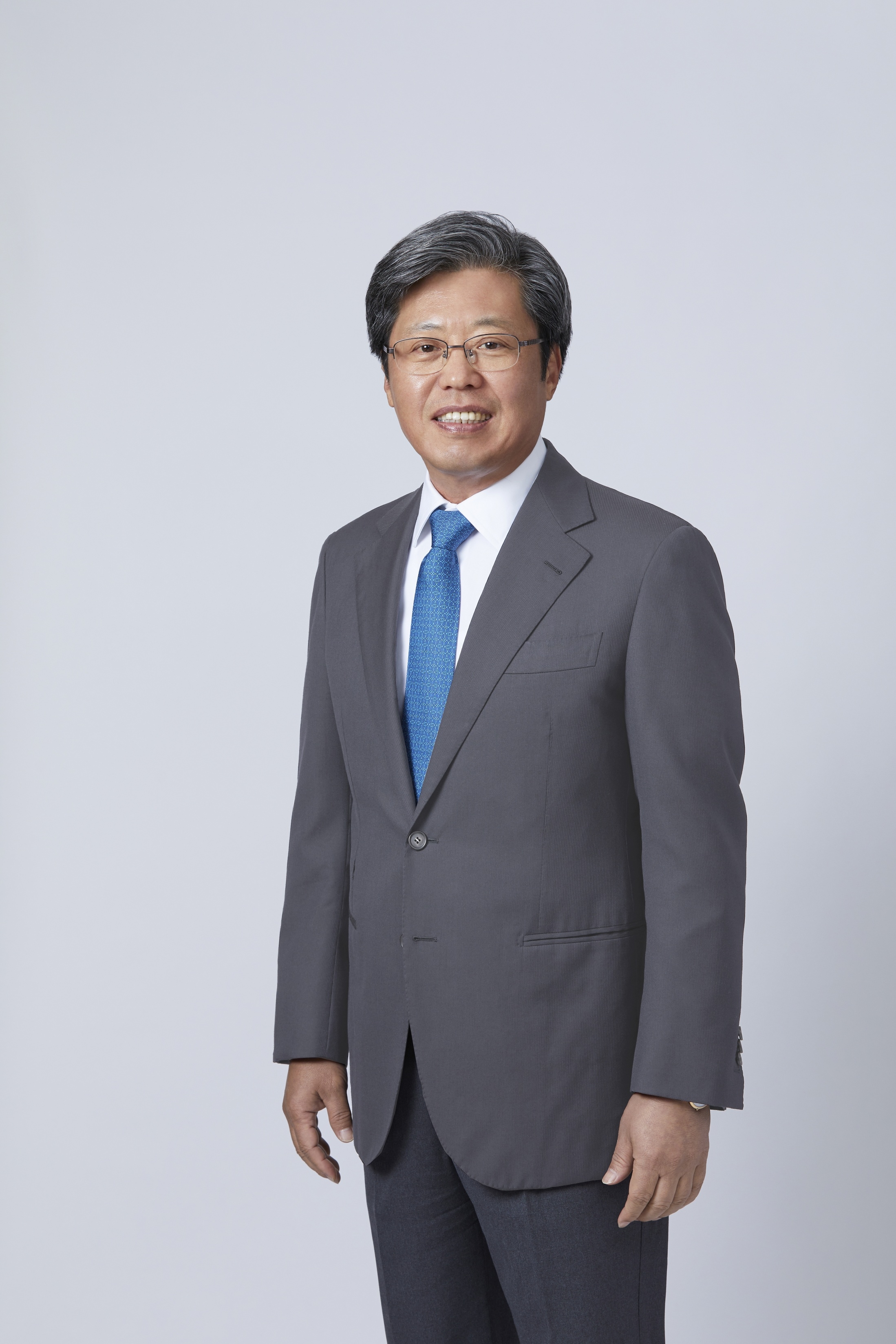
"Alumni
Association President’s New Year’s Address"
“Built
upon our formidable alumni network and pride in our school, the Korea
University Alumni Association is evolving into a model organization recognized
not only in Korea but across the globe. This is realized through our alumni
fulfilling their social responsibilities and embracing the role of progressive
and just intellectuals.”
Korea University Alumni Association
A New Leap Forward Toward the Next
100 Years
My dear 370,000 fellow alumni,
The year 2026, the Year of the Red Horse, has dawned. I
wish you and your families a New Year filled with health, happiness, and
prosperity.
Last year, 2025, was a deeply meaningful one as our Alma Mater
celebrated its 120th anniversary. Founded in 1905 with the conviction to “save
the nation through education,” Korea University has now risen beyond Korea to
stand tall as a prestigious private university recognized by the world. This
glory was made possible solely by the school spirit and unity of you, our
370,000 alumni.
Now, our Alumni Association faces a new turning point: our own 120th
anniversary in 2027. Started as the ‘Bojeon Friendship Society’ in 1907, this
Association has been a pillar of support for the university’s development for
the past 120 years. Based on the “Future 100-Year Roadmap” declared last year,
we are launching the Preparatory Committee for the 120th Anniversary of the Korea
University Alumni Association this year. We will establish a new vision, goals,
and slogans, while pushing forward with meaningful projects such as
commemorative ceremonies and publications. Through these efforts, we will
solidify our purpose for a better future.
Respected alumni,
In 2026, our Association aims to systematize our social contribution
activities under the core vision of “An Alumni Association Serving the
People and Society.”
The ‘Alumni Social Service Corps,’ launched last July, was expanded
and re-established as a public benefit corporation on December 31. This has
laid the foundation for us to conduct more transparent and systematic social
contribution activities. We will not only serve vulnerable groups but also
expand medical, legal, and educational support for multicultural and
single-parent families, thereby providing
practical assistance to resolving social challenges such as the low
birth rate and childcare issues. Furthermore, we will devote our utmost efforts
to elevating the pride of our alumni.
At last year’s annual Ko-Yon Games, we broke the tenuous balance of
the “60-year war” with a historic record of 21 wins, 20 losses, and 11 draws,
achieving an overall victory. We will spare no effort to ensure we carry that
momentum into this year to achieve another decisive and total victory.
Additionally, we will enhance the prestige of major awards, such as the Social
Service Award, and strengthen our solidarity with over 70 overseas chapters and
30,000 alumni living abroad, elevating our status as a truly global alumni association.
The spirit of “Liberty, Justice, and Truth” flows through the
120-year history of Korea University. Our alumni have always stood tall in the
face of national hardships, lighting the way for society.
In this first year of preparing for our Association’s 120th anniversary
in 2027, let us unite once again as one and take a great leap
toward the next 100 years.
Once again, I wish you continued success and peace in your homes.
Happy New Year.
January 1, 2026
Seung Myung-ho, 35th
President of the Korea University Alumni Association
2026-02-06
조회수 : 11
-
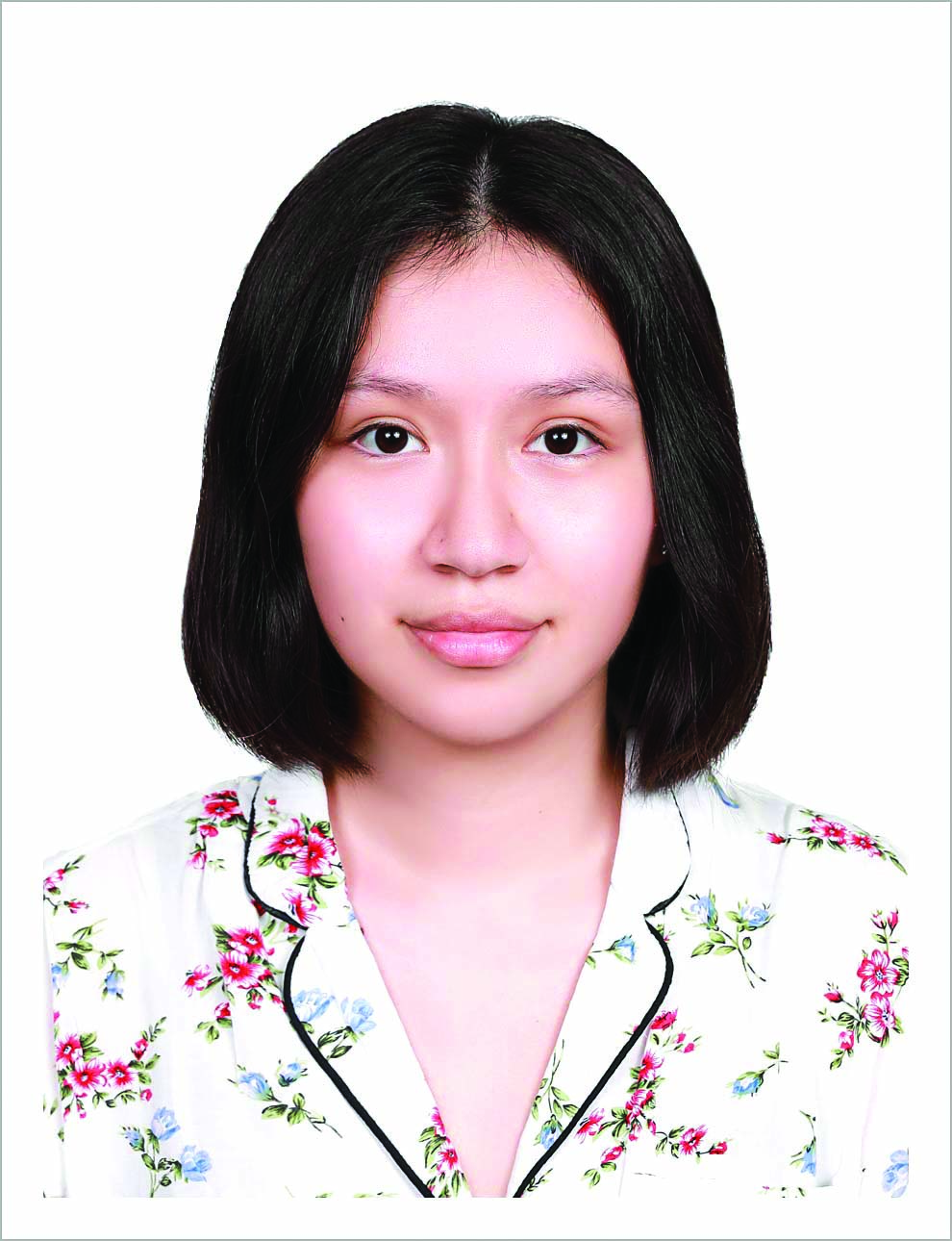
Mariana Sotelo (International Studies, ’21) Coordinator at ‘Playwith Latam’"I want to break down barriers between Korea and Peru"It started with K-pop.
A Peruvian girl, whose curiosity about Korea led her to the Division of
International Studies at KU, has now grown into a proud professional serving as
a bridge between Peru and Korea.
Written by Senior
Reporter Lee Hyun-hwa
Q. Nice to meet
you, Ms. Sotelo. You studied at the Division of International Studies (DIS) at
KU. I’m curious about what brought you
here.
A. Hello, fellow
alumni. I am Mariana Sotelo. I was born and raised in Peru. Originally, I
considered going to medical school in my home country, but since I had such a
strong interest in international affairs and global issues, I turned my eyes to
universities abroad with an international perspective. Around that time, my
sisters introduced me to K-pop and K-dramas (laughs). Slowly, I became interested
in the Korean language and culture, and like destiny, I was able to enter Korea
University’s Division of International Studies.
Q. So, K-pop was the
spark. But there are many other universities; why ‘Korea University’?
A. First of all, I
thought Korea University had the highest reputation in Korea (laughs). I was
particularly impressed by the educational environment of the DIS. Thanks to
faculty members with diverse nationalities and backgrounds, I could view a
single international issue from multiple perspectives. The curriculum was
attractive because it wasn't limited to politics or economics but encompassed
society and culture as well. Also, the information on the admission process and
school life for foreigners like me was well-organized, so it was reliable.
Q. Your Korean is
quite fluent. Is there a memorable moment from your student days?
A. My time with The
Granite Tower, KU’s English newspaper. I experienced the entire magazine
production process, from writing articles to editing and design. Through this
activity, I was able to enjoy writing beyond just academic work. The
relationships I built with friends of various nationalities are one of the
greatest assets I cultivated during my college life.
Q. You are
currently working at a Korean game company. What does your work entail?
A. Yes, I am
currently working as a coordinator at the Latin America branch of Playwith. My
role involves translating documents to ensure projects in the Latin American
region run smoothly, writing reports summarizing game-related metrics and
performance, and conveying improvements or issues raised locally to the
headquarters. I act as a bridge to help both sides understand each other.
Working at a Korean company as a foreigner, I realized that the ability to read
the situation—what Koreans call nunchi—is crucial.
There is a saying, “‘Ah’ is different from ‘Oh’” (meaning nuance matters
immensely). Especially when raising criticism or pointing out problems, the
recipient's reception can vary greatly depending on how you express it. The
ability to recognize and coordinate these cultural differences is essential.
Q. If you’ve
mastered nunchi, you’ve basically become Korean! It seems the ‘KU
Spirit’ would be helpful in that regard.
A. Exactly. My
perception of ‘competition’ has changed. Academically, it is a very intense
environment, but in moments like Ipselenti or the annual Ko-Yon Games, you
feel a powerful sense of unity. I learned that competition is not something to
be avoided, but an element that can draw out your own potential within a
healthy boundary. Also, at the DIS, I was able to intensively develop the
ability to analyze issues from diverse perspectives and communicate them
clearly. This is incredibly helpful in my current practical work collaborating
with Korea.
Q. Is there a
regional alumni chapter in Peru?
A. Unfortunately,
there doesn't seem to be an official gathering for Peruvian students or
graduates yet. However, there is plenty of potential to form an online-based community.
The starting process won't be easy, but I expect it can develop into a
meaningful network in the future.
Q. As a talent
connecting Korea and Latin America, do you have a goal you wish to achieve?
A. Although hallyu
is a global trend, the understanding of Korea is still limited in Latin
America, including Peru. Conversely, the same goes for Koreans' perception of
Latin America. I want to break down these walls and help facilitate a more
balanced mutual understanding. I was so happy to attend Korea University. I
will always cheer for the KU Alumni Association!
2026-02-05
조회수 : 7
-
25
Years of Unconditional Love for Students... Passing at the Age of 58
University and
Community Launch the ‘Youngcheol Burger Scholarship’ Campaign
Mr. Lee
Young-cheol, the owner of Youngcheol Burger who had been responsible for the
hearty meals of students on the streets of Anam-dong for 25 years, passed away
on December 13, 2025, after a battle with lung cancer. Although he never attended
the university, he was a true member of the KU Family, sharing in every joy and sorrow
of the students at every historic scene, from matriculation ceremonies to the annual Ko-Yon Games.
The late Mr. Lee
began in 2000 with a street stall in Anam-dong, selling the ‘1,000-won burger.’
He served food with all his heart, driven by the simple wish that students
should not skip meals. Even when his own business faced financial difficulties,
he personally practiced a life of sharing by consistently donating scholarships
every year and supporting the underprivileged in the local community. Even when
thousands of KU students helped reopen his shop through crowdfunding during a
crisis 10 years ago, he continued his philanthropic activities, saying, "I
will repay the love I have received."
To honor and
inherit the late Mr. Lee’s noble spirit of sharing, the university is launching
the ‘Youngcheol Burger Scholarship’ campaign. This campaign will operate as a
matching fund, where the school contributes an amount equal to the donations
made by supporters.
The raised funds
will be used entirely as scholarships for students, in accordance with the
wishes of the bereaved family. A campaign representative stated, "We hope
many members of the KU family will join us on his final journey so that the
seeds of love he planted do not cease." The legacy of Mr. Lee Young-cheol,
who taught us the warmth of a single meal for 25 years, will now live on
eternally, supporting the dreams of future students.
2026-02-05
조회수 : 14
-
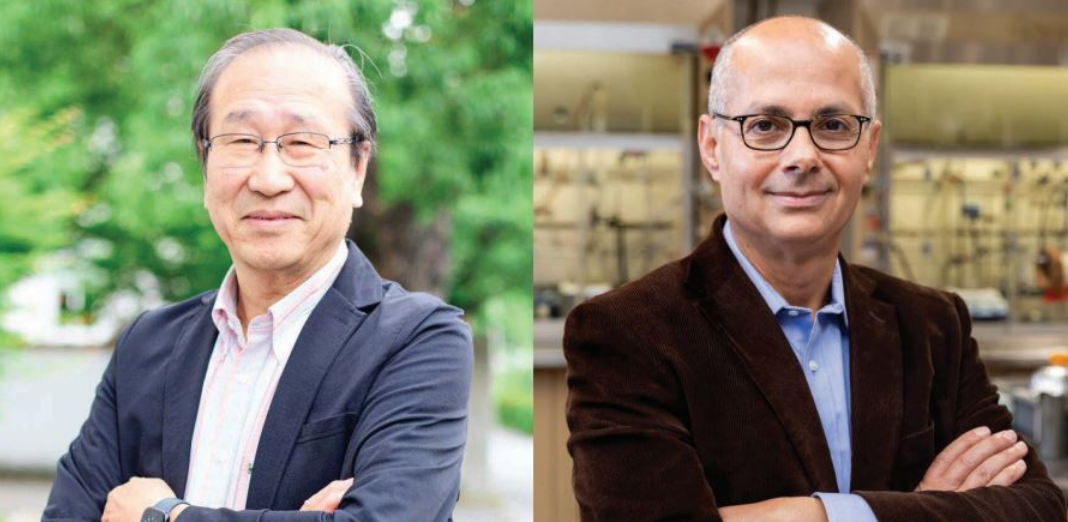
Full-scale
Launch of Energy, Environment, and Bio-Convergence Research Accelerating
Solutions to Global Challenges through the ‘Crimson Project’ Professor Susumu Kitagawa (Kyoto University) Professor Omar M. Yaghi (UC Berkeley)
Korea University
has appointed the co-recipients of the 2025 Nobel Prize in Chemistry, Professor
Omar M. Yaghi (UC Berkeley) and Professor Susumu Kitagawa (Kyoto University),
as Distinguished Professors at the KU-KIST Graduate School of Converging
Science and Technology. This move marks the beginning of full-scale convergence
research in energy, environment, and biotechnology. The two scholars are
world-renowned for pioneering and developing the field of Metal-Organic
Frameworks (MOFs), an achievement for which they shared the Nobel Prize. They
are set to embark on innovative research in collaboration with KU researchers.
Even before the
Nobel Prize announcement, the two professors had agreed to their appointments
and participation in the ‘Crimson Project,’ KU’s international collaborative
initiative aimed at solving humanity's most pressing challenges. The news of
their Nobel Prize win on October 8, 2025, served as a powerful driving force
for this project.
Professor Yaghi
will focus on researching next-generation energy and environmental materials
based on MOFs and Covalent Organic Frameworks (COFs), as well as advising on
research strategies and nurturing talent. Professor Kitagawa plans to pioneer
new functionalities and applications of MOFs, such as gas adsorption, and lead
the strengthening of global research capabilities through seminars and lectures.
2026-02-05
조회수 : 36
-
첫페이지이전페이지1다음페이지마지막페이지


